Value your time? Get a high-level overview:
 Ask ChatGPT
 Ask Grok
 Ask Perplexity
 Ask Claude
 Ask Google AI
⚡
- Keyword strategy and content depth: ranking requires moving beyond the product name to target direct identifiers, technical variations, and category-specific modifiers, while mining Google Search Console for hidden opportunities. Useful, original product information helps shoppers choose and gives search systems more reason to surface a page than duplicated manufacturer copy.
- Technical foundation: optimized title tags and meta descriptions drive click-through rate, while structured data (Schema.org) enables rich results such as star ratings, pricing, and stock status. Combined with descriptive URLs, compressed images, and mobile-first design compliant with Core Web Vitals, these elements form the technical baseline for visibility.
- Trust and engagement signals: Customer reviews can answer real purchase questions and add first-hand product context when they are genuine and well moderated. An FAQ can reduce pre-purchase uncertainty; use FAQPage markup only when questions and answers are visible and useful — it does not guarantee a rich result. Video can help customers evaluate a product when it answers a question that images and specifications do not. A strategic internal linking framework distributes authority across the full catalog.
- What separates a page that ranks from one that doesn’t? A systematic approach that treats every product page as a high-performance landing page — technically sound, content-rich, and architecturally integrated — rather than a series of isolated, one-time fixes. If auditing and optimizing every one of these elements across your catalog feels resource-intensive, our SEO team can manage full-scale product page optimization for you.
In the world of eCommerce, the gap between a visitor and a customer is bridged on the product page. While homepages and category pages are essential for broad visibility, the individual product listing is where the decision to buy is finalized. If these pages are treated as secondary or automated afterthoughts, you are likely leaving a significant portion of your potential revenue on the table.
Optimizing product pages for search engines is no longer just about repeating a keyword in the title. It’s about creating a technical and content-driven environment that satisfies both Google’s ranking algorithms and the user’s need for information. By implementing a sophisticated SEO strategy—focusing on unique data and structured markup.

In this guide, we will break down 14 professional strategies to elevate your eCommerce search presence. Start with six priority actions—search intent, unique decision-useful content, product/offer schema, crawlable variants, internal links, and speed/UX—then apply the eight supporting tactics. In each area, check what is wrong, change what matters, measure the outcome, and avoid the common mistake. We will move beyond basic optimizations to explore how technical precision and strategic content creation can transform your store’s organic performance.
Table of Contents
1. Keyword Research
Most eCommerce businesses limit their visibility by optimizing only for the product’s name. While this is a foundational step, a truly professional SEO strategy involves identifying the full spectrum of search terms that lead to a purchase. To dominate the market, you must understand how users search at different stages of the buying cycle.
Beyond the Product Name
Based on established SEO data, high-performing product pages target three specific layers of search intent:
- Direct Identifiers. Specific brand names and exact model numbers (e.g., Sony WH-1000XM5).
- Technical Variations. Queries that include specific part numbers, often used by customers looking for precise replacements.
- Category-Specific Modifiers. Terms that describe the product’s attributes, such as wireless, noise-canceling, or over-ear.
Analyzing Search Intent and SERP Features
It is critical to analyze the Search Engine Results Pages (SERPs) before finalizing your keyword list. If the top results for a specific term are predominantly informational blog posts, a product page will struggle to rank there. As experts, we prioritize Commercial Intent—keywords where the search results are populated by other product listings, signaling that the user is ready to buy.
Leveraging Search Performance Data
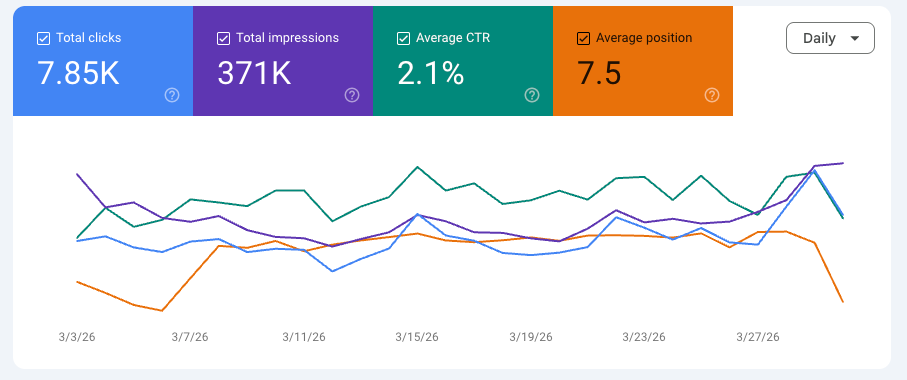
Monthly trends in Google Search Console
While third-party tools provide estimates, your own data is the most reliable source of truth. By analyzing your performance in Google Search Console (GSC), you can identify:
- Hidden Opportunities. Keywords where your product ranks on page two but already receives impressions.
- Long-Tail Variations. Specific phrases users type to find your products that you might have missed in your initial copy.
- Click-Through Rate (CTR) Gaps. High-volume keywords with low clicks, suggesting a need for better Title Tag optimization.
| Keyword Category | Strategic Focus | Example Focus |
| Primary | High-volume product name | Organic Coffee Beans |
| Secondary | Attribute-based terms | Dark Roast Coffee Beans 1kg |
| Long-tail | Specific model / SKU | Arabica Dark Roast SKU-402 |
2. High-Quality Unique Descriptions
One of the most significant obstacles to ranking eCommerce product pages is the reliance on manufacturer-provided descriptions. When multiple retailers use the same technical blurbs, search engines face a deduplication challenge. To ensure your page is the one that ranks, you must provide a unique editorial value that goes beyond the standard specifications.
The Problem with Thin or Duplicated Content
Search engines prioritize pages that offer comprehensive information. If a product page contains only a few lines of text or a simple bulleted list of features, it is often flagged as thin content. This type of content rarely provides enough context for search engines to rank it for competitive queries.
Strategy for Unique Descriptions
To build authority and improve visibility, your descriptions should be structured to serve both the user and the search algorithm:
- Focus on Benefits, Not Just Features. Instead of simply listing technical specs, explain how the product solves a specific problem for the customer.
- Incorporate Semantic Keywords. Use natural language to include synonyms and related terms that customers might use when searching.
- Maintain a Consistent Brand Voice. Unique copy not only helps SEO but also builds a cohesive brand experience that improves conversion rates.
Strategic Content Structure
A high-performing product description should follow a logical flow that answers the shopper’s next decision questions:
| Component | Purpose | Focus Area |
| The Hook | Immediate engagement | Unique selling proposition (USP) |
| The Detailed Body | Contextual relevance | Benefit-driven narrative |
| Technical Specs | Specificity | Tabular or bulleted data for readability |
3. Optimize Title Tags & Meta Descriptions
Title tags and meta descriptions are your primary tools for capturing attention in the search engine results pages (SERPs). While the Title Tag remains a confirmed ranking factor, the Meta Description acts as your organic ad copy. Even with a #1 ranking, a poorly written snippet will fail to convert impressions into clicks.
Precision in Title Tags
A high-performing title must be both descriptive and concise. To avoid truncation (being cut off) in Google’s results, it is essential to keep your titles under 60 characters. Based on professional SEO standards, an effective eCommerce title should:
- Prioritize Primary Keywords. Place the most important product name or category at the beginning.
- Include Critical Identifiers. For technical products, adding a model number, size, or color helps capture specific, high-intent traffic.
- Maintain Brand Consistency. End with your brand name to build authority and recognition.
High-Impact Meta Descriptions
Although meta descriptions do not directly influence rankings, they are the key to a high Click-Through Rate (CTR). Your description should be a summary of your value proposition, kept under 160 characters. Use this space to highlight your Unique Selling Propositions (USPs) such as Free Shipping, In Stock, or Lifetime Warranty.
Scaling with Dynamic Templates
For large-scale eCommerce stores, manual optimization for every SKU is often impossible. The solution lies in creating intelligent, attribute-based templates that ensure consistency across the entire catalog.
| Element | Professional Strategy | Example Structure |
| Title Tag | [Product Name] [Model] | [Brand] |
| Meta Description | [Value Prop] + [Benefits] + [CTA] | Buy fresh organic dark roast coffee. Free delivery on orders over $50. Shop our 2026 collection now! |
4. Structured Data Markup
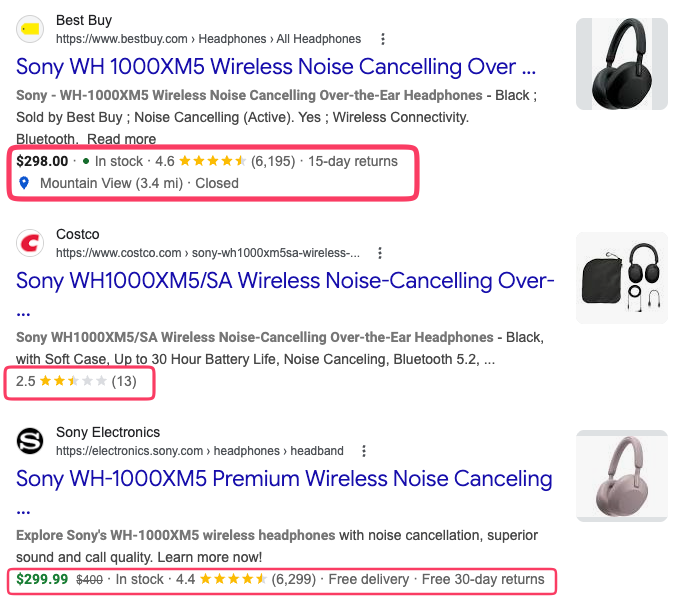
Structured data, often implemented via Schema.org, is the technical bridge that allows search engines to understand the specific attributes of your product. Instead of relying on a crawler to guess your price or availability, you provide this data in a standardized format. This is the foundation for achieving Rich Results—those enhanced search listings that include star ratings, prices, and stock status.
The Core Schema Elements for eCommerce
To maximize your visibility, your product pages should prioritize the following structured data properties:
- Price and Currency. Displays the current cost directly in the search results, capturing high-intent buyers.
- Availability. Signals whether an item is In Stock, reducing the bounce rate from users looking for immediate purchase.
- Aggregate Rating. Showcases customer satisfaction through star ratings, providing instant social proof before a user even clicks.
- Product Brand and Identification. Clearly defines the manufacturer and MPN/SKU to help Google categorize the item accurately.
The Impact on Click-Through Rate (CTR)
While structured data is not a direct ranking boost, its impact on CTR is transformative. A search result that displays a 4.8-star rating and a clear price tag is significantly more likely to win the click over a plain, text-only competitor. Furthermore, properly implemented markup ensures your products are eligible for specialized display in Google’s Product and Shopping tabs.
Technical Implementation Checklist
| Schema Property | Strategic Value | Expected Outcome |
| offers | Price transparency | Price display in SERP |
| aggregateRating | Social proof | Star ratings in search results |
| availability | User intent matching | In Stock label in snippet |
| brand | Authority | Categorization in Product grids |
5. Leverage Customer Reviews
Customer reviews are often viewed primarily as a conversion tool, but their impact on search engine optimization is far more significant. In the context of eCommerce SEO, reviews provide a continuous stream of fresh, relevant, and unique content that search engines highly value. By integrating reviews directly into your product pages, you enable customers to naturally support and expand your keyword strategy.
Beyond their role as unique content, reviews also serve as a direct signal of trust and experience (E-E-A-T) for search engines, which is especially important in Your Money or Your Life (YMYL) categories, where credibility and reliability are critical ranking factors.
The SEO Advantages of Reviews
Strategic implementation of customer feedback provides several key benefits:
- Dynamic Content Updates. Search engines prioritize pages that are frequently updated. Every new review signals to crawlers that the page is active and relevant.
- Long-Tail Keyword Expansion. Customers often describe products in their own words—phrases that you might not include in formal copy. These natural descriptions often match the specific, conversational queries used by other potential buyers.
- Enhanced Semantic Context. Detailed reviews provide additional thematic depth to the page, helping search engines better understand the practical applications and quality of the item.
Maximizing Review Value
To fully leverage reviews for SEO, they must be accessible to search crawlers. This means avoiding hidden review widgets that load only via complex scripts which search engines may struggle to index.
- Indexable Text. Ensure that the review text is part of the page’s HTML, allowing it to contribute to the page’s overall content weight.
- Encourage Specificity. Use prompts that ask customers about specific features (e.g., How was the fit? or Describe the battery life). This naturally drives the inclusion of high-value technical keywords.
- Social Proof in Search. As established in the Structured Data section, these reviews are the primary source for the star ratings displayed in search results, which directly influences user trust and engagement.
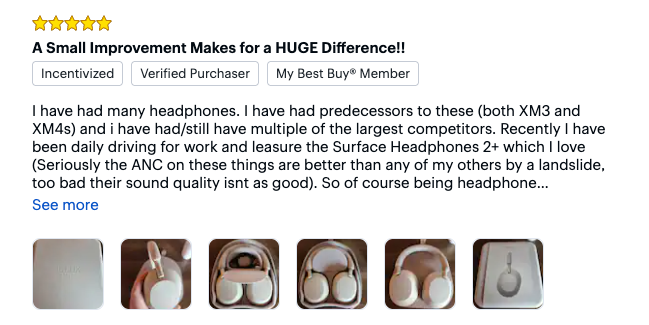
User-generated content is a scalable way to overcome the thin content problem. By fostering a community of reviewers, you are essentially building a library of unique, long-tail content that differentiates your store from competitors using static manufacturer data.
Senior eCommerce Strategist
6. Image Optimization
In eCommerce, images are often the largest files on a product page. If left unoptimized, they become the primary cause of slow loading times and poor user experience. However, when managed correctly, images provide a secondary stream of organic traffic through visual search engines. A professional approach to image SEO balances aesthetic quality with technical efficiency.
Descriptive File Naming
Search engine crawlers cannot see the content of an image in the same way humans do; they rely heavily on metadata. Using generic file names like IMG_001.jpg is a missed opportunity. Instead, every file name should be descriptive and include relevant keywords.
- Poor: product_v2_final.png
- Professional: mens-leather-running-shoes-black.jpg
The Strategic Role of Alt Text
Alternative text (Alt text) is a critical accessibility feature that also serves as a direct ranking signal. It should provide a concise, accurate description of the image.
- Avoid Keyword Stuffing. A list of disconnected keywords (e.g., shoes, buy shoes, cheap shoes) can be flagged as spam.
- Focus on Context. Describe what is actually shown. For a detail shot, use: Close-up of waterproof stitching on a leather running shoe.
Balancing Compression and Quality
Page speed is a confirmed ranking factor, and heavy images are its greatest enemy. According to technical standards, you must optimize the weight of your visuals without sacrificing the clarity your customers expect.
- Modern Formats. Utilize high-efficiency formats like WebP to achieve better compression than standard JPEGs.
- Proper Dimensions. Serve images in the actual size they will be displayed. Uploading a 3000px image for a 300px thumbnail creates unnecessary lag.
- Lazy Loading. Implement scripts that ensure images only load as they enter the user’s viewport, significantly improving initial page load scores.
| Image Factor | Technical Requirement | SEO Benefit |
| File Name | Keyword-rich and hyphenated | Better indexing in Image Search |
| Alt Text | Descriptive and contextual | Accessibility and topical relevance |
| File Size | Compressed (WebP/JPEG) | Improved Core Web Vitals (LCP) |
7. URL Structure
A well-structured URL is a roadmap for both search engines and users. It should communicate the page’s content and its location within your site’s hierarchy at a glance. In eCommerce, where catalogs can grow into the thousands, a clean and consistent URL structure is vital for maintaining crawl budget and ensuring that your link equity is distributed effectively.
The Principles of a Professional URL
A high-ranking product URL should be descriptive, short, and free of unnecessary parameters. Based on professional SEO standards, you should prioritize the following:
- Human-Readable Slugs. Avoid long strings of numbers or session IDs. Use clear, hyphen-separated keywords.
- Avoid: /product/item-id=9582?cat=4
- Embrace: /products/leather-laptop-bag-brown
- Keyword-Driven Context. Include the primary product name and, if applicable, a key attribute (like color or size) to capture specific long-tail searches.
- Eliminate Stop Words. Remove unnecessary words like a, and, the, of. This keeps your URLs concise and focused on the core keywords.
Flat vs. Hierarchical Structures
There is an ongoing debate among SEO experts regarding the depth of a URL. Your choice should depend on the scale of your inventory:
- Flat Structure: example.com/product-name — Simple and direct, ensuring your products are only one click away from the root domain.
- Hierarchical Structure: example.com/category/sub-category/product-name — Provides excellent context and helps search engines understand your site’s taxonomy, but can lead to long, cumbersome URLs if not managed carefully.
Handling Canonicalization
One of the biggest technical risks in eCommerce is URL fragmentation, where the same product is accessible through multiple paths (e.g., from different categories). To prevent duplicate content issues, it is essential to implement Canonical Tags. This tells search engines which version of the URL is the master copy, concentrating all your ranking power into a single, authoritative link.
| URL Element | Best Practice | Impact |
| Length | Under 75 characters | Better visibility in SERP |
| Format | All lowercase, hyphenated | Improved readability |
| Logic | Static, no dynamic IDs | Easier for bots to crawl |
8. Mobile-First Design
In the modern eCommerce landscape, the mobile version of your product page is no longer an alternative—it is the primary version that search engines evaluate. If your mobile experience is compromised by slow loading times, intrusive elements, or poor layout, your overall rankings will suffer across all devices. A professional SEO strategy ensures that the mobile interface is fast, functional, and fully synchronized with the desktop version.

An example of a poorly optimized mobile version; to view the details, swipe right
The Core Web Vitals Factor
Google’s performance metrics, known as Core Web Vitals, are particularly stringent for mobile users who may be browsing on slower 4G or 5G connections. Key areas of focus include:
- Largest Contentful Paint (LCP). The time it takes for the main product image or headline to become visible.
- Cumulative Layout Shift (CLS). Ensuring that buttons or text don’t jump while the page is loading, which prevents accidental clicks and user frustration.
- Touch Target Size. Buttons and links must be large enough to be easily tapped with a thumb, reducing friction in the conversion funnel.
Ensuring Content Parity
A common technical error in eCommerce is hiding heavy content—such as detailed descriptions, technical specifications, or customer reviews—on mobile devices to save space. However, search engines index the content they see on the mobile version. If it’s hidden or removed, your page loses the semantic weight and keyword relevance it has on the desktop.
Mobile Optimization Checklist
To maintain high visibility, your mobile product pages should follow these technical standards:
- Responsive Images. Serve scaled versions of images that fit the user’s screen resolution perfectly.
- Avoid Intrusive Interstitials. Pop-ups that block the main content on mobile can lead to lower search rankings.
- Prioritize Above-the-Fold Content. The product name, price, and Add to Cart button should be visible immediately without excessive scrolling.
| Metric | Target Goal | Impact on SEO |
| LCP | Under 2.5 seconds | Improved ranking and retention |
| CLS | Less than 0.1 | Higher user trust and stability |
| Font Size | Minimum 16px | Accessibility and readability |
9. Internal Linking
Internal linking is the connective tissue of an eCommerce site. In a large catalog, individual product pages can easily become orphaned—isolated from the rest of the site and invisible to search engines. By building a strategic internal linking framework, you ensure that every product is discoverable, indexed, and infused with the authority of your more popular pages.
The Strategic Power of Breadcrumbs

Breadcrumbs are essential for both user experience and search engine categorization. They provide a clear, text-based path from a specific product back to its parent categories.
- SEO Context. Breadcrumbs create automated, keyword-rich internal links that reinforce your site’s taxonomy.
- Crawl Efficiency. They allow search engine bots to easily move up and down the site hierarchy, ensuring that category pages receive a constant flow of internal authority.
Related Products as a Growth Engine
Sections like Customers Also Bought or Similar Items are more than just upselling tools. From a technical SEO perspective, they serve several critical functions:
- Distributing Page Authority. You can pass link juice from your high-traffic bestsellers to newer or lower-visibility products, helping them rank faster.
- Increasing Click-Through Depth. By providing a logical next step, you reduce bounce rates and increase the number of pages a user (and a bot) visits per session.
- Thematic Relevance. Linking to similar products reinforces the semantic cluster of that category, telling search engines that your site is a deep authority on that specific subject.
Best Practices for Anchor Text
When linking between products, the anchor text (the clickable words) should be descriptive and include the target keyword of the destination page. Avoid generic terms like click here or view more. Instead, use the full product name to provide maximum context to the search algorithm.
| Linking Element | Strategic Purpose | Outcome |
| Breadcrumbs | Categorical hierarchy | Improved site navigation & crawling |
| Related Items | Authority distribution | Faster indexing of deep pages |
| Category Links | Thematic clustering | Stronger keyword relevance |
10. Page Speed
In eCommerce, performance is synonymous with profitability. Even a delay of a few hundred milliseconds can lead to a noticeable drop in conversion rates. Beyond user experience, search engines have made page speed a core ranking factor through the Core Web Vitals framework. For product pages, this means that critical elements—such as the main image, price, and Add to Cart button—must become interactive almost instantly.
Understanding the Metrics That Drive Revenue
To accurately evaluate your store’s performance, it’s essential to move beyond total load time and focus on how users actually perceive speed:
- Largest Contentful Paint (LCP). Measures how quickly the main product content becomes visible; the target is under 2.5 seconds.
- Interaction to Next Paint (INP). Measures how quickly the page responds to user interactions after the first paint, replacing the retired First Input Delay metric.
- Cumulative Layout Shift (CLS). Measures visual stability; unexpected shifts in elements like price or purchase buttons degrade user experience and negatively impact rankings.
For modern eCommerce platforms, especially those built with JavaScript frameworks like React or Vue, rendering strategy plays a critical role in achieving strong Core Web Vitals scores. Techniques such as Server-Side Rendering (SSR) or partial hydration can significantly improve LCP and INP, particularly on mobile devices, by ensuring that key content is available and interactive sooner.
In addition, for stores operating across multiple regions or languages, implementing hreflang tags is essential. This prevents duplicate content issues and ensures that users—and search engines—are directed to the correct regional or language-specific version of a product page, strengthening both SEO performance and user experience in international markets.
Technical Levers for Optimization
Achieving elite speed scores on a content-heavy eCommerce site requires a multi-layered approach to optimization:
- Code Minification and Compression. Stripping unnecessary characters from HTML, CSS, and JavaScript files to reduce the overall payload sent to the user’s browser.
- Eliminating Render-Blocking Resources. Prioritizing the loading of critical code so the top of the page renders immediately, while secondary scripts (like chat widgets) load in the background.
- Advanced Caching Strategies. Storing static elements of your product pages closer to the user to minimize the time-to-first-byte (TTFB).
Performance Benchmarks
| Performance Metric | Professional Target | Business Impact |
| LCP | < 2.5s | Higher search visibility |
| INP | < 200ms | Improved interaction rates |
| CLS | < 0.1 | Reduced accidental clicks |
11. FAQ Sections
A standard product description often fails to address the specific, granular questions that a hesitant buyer might have. By integrating a Frequently Asked Questions (FAQ) section directly onto your product pages, you achieve two strategic goals: you remove friction from the conversion funnel and you provide search engines with highly relevant content to rank for question-based queries.
Dominating the Search Results Layout
When you answer common questions on your page, you increase the likelihood of your content appearing in search features such as Featured Snippets or People Also Ask when the content earns them. These placements are not guaranteed. They may appear above classic results when Google chooses to show them. They can help you compete even if their main page ranks higher than yours.
- Targeting High-Intent Questions. Use questions that address compatibility, sizing, maintenance, or usage.
- Directness is Key. Search engine algorithms favor concise, factual answers. Provide a clear response in the first 40–50 words to maximize snippet eligibility.
- Semantic Expansion. FAQs allow you to naturally include related keywords and synonyms (e.g., washing instructions for a waterproof jacket) that strengthen the topical authority of the entire page.
FAQ Schema
To ensure your questions and answers are recognizable to search crawlers, they can use FAQPage Structured Data. FAQPage markup can help search engines interpret visible FAQ content. For most commercial sites, it does not result in a regularly shown FAQ rich result and does not guarantee snippets, People Also Ask visibility, or a higher click-through rate.
| FAQ Strategy | Tactical Focus | Search Benefit |
| User Queries | Real-world customer pain points | Helps answer pre-purchase questions; search-feature visibility is not guaranteed |
| Rich Markup | FAQ Structured Data (JSON-LD) | Helps search engines interpret visible FAQ content; commercial FAQ rich results are not regularly shown |
| Keyword Variety | Synonyms and natural language | Broadened keyword footprint |
12. Handling Out-of-Stock Products
Inventory fluctuations are a natural part of eCommerce, but poor management of Out of Stock (OOS) pages can lead to a rapid decline in search rankings. When a product is no longer available, many site owners instinctively delete the page or allow it to return a 404 error. This is a strategic mistake that discards years of accumulated authority and internal link equity.
Strategy for Temporary Unavailability
If a product is expected to return to stock, the goal is to maintain its search position while managing user expectations.
- Keep the URL Live. Do not de-index or redirect the page. Search engines should continue to see the content as active.
- Update the UI, Not the SEO. Replace the Add to Cart button with a Notify Me form. This keeps the user engaged and provides you with valuable lead data.
- Status Updates in Metadata. Ensure your structured data reflects the OutOfStock status. This prevents users from seeing In Stock in search results only to be disappointed upon clicking, which protects your long-term engagement metrics in Google Search Console.
Strategy for Permanently Discontinued Items
When a product will never return, you must decide how to transfer its ranking power to the rest of your catalog.
- 301 Redirect to the Successor. If there is a newer model or a highly similar replacement, a permanent 301 redirect is the most effective way to pass link equity to the new URL.
- Redirect to the Parent Category. If no direct replacement exists, redirecting to the most relevant sub-category page is a better alternative than a dead 404 page. This keeps the user within your sales funnel.
- The Sunset Page. For high-authority products that are now collectors’ items or have significant informational value, you may choose to keep the page live but clearly state it is discontinued, providing links to the latest alternatives.
| Availability Status | Technical Action | SEO Objective |
| Temporary OOS | Keep live + Notify form | Maintain current rankings |
| Discontinued (New Model) | 301 Redirect to New SKU | Transfer link equity |
| Discontinued (No Successor) | 301 Redirect to Category | Reduce bounce rate & 404s |
13. Video Content
While high-quality imagery is a prerequisite for any online store, video content has become a decisive factor for both ranking and conversion. A professional SEO strategy recognizes that video is not just a supplement to text, but a distinct data type that search engines prioritize. By integrating video, you satisfy the growing user demand for dynamic demonstrations while sending strong signals of topical depth to search algorithms.
Why Video is a Strategic SEO Asset
Beyond the visual appeal, video content directly influences several key performance indicators (KPIs) tracked by search engines:
- Longer on-page engagement. Users who watch a product video often stay longer because the video answers a question that text and images do not. Treat that as a UX and conversion signal, not as a confirmed Google ranking factor.
- Decision-useful uniqueness. Prefer pages that add product context shoppers cannot get from the manufacturer sheet alone. A video demonstration can show product details that static descriptions leave unclear.
- Multi-Channel Visibility. Optimized videos are eligible to appear in Google’s Video search tab and as rich snippets in the main search results, creating an additional entry point for organic traffic.
Technical Optimization for Video
To ensure your video content supports your SEO goals rather than hindering your page performance, you must follow established technical standards:
- Efficient Embedding. Instead of hosting large video files on your own server—which can cripple page load speeds—utilize professional external hosting and embed the content.
- Video Object Schema. Use VideoObject structured data to provide search engines with the video’s title, description, duration, and thumbnail URL. VideoObject markup helps search engines understand and surface video content more reliably.
- Transcripts and Captions. Providing a text-based transcript of your video content helps search engines read the audio, offering more keyword context and improving accessibility.
14. Social Sharing Buttons
While social media shares are not a direct ranking signal within the core search algorithm, they are a powerful catalyst for organic growth. A product page that is easy to share is a page that attracts more visibility, more natural backlinks, and a higher volume of branded searches. In the context of eCommerce, social integration acts as a bridge between your technical SEO and your broader digital presence.
The Indirect SEO Impact of Social Signals
Strategic placement of sharing buttons creates a virtuous cycle that supports your search performance in several ways:
- Accelerated Indexing. High traffic spikes from social platforms can signal to search engine crawlers that your content is trending, leading to faster indexing of new product pages.
- Natural Link Building. The more your products are shared on platforms like Pinterest or LinkedIn, the higher the probability they will be discovered by creators, bloggers, and journalists who may provide authoritative backlinks.
- Increased Branded Search. Frequent social visibility leads to more users searching for your brand specifically (e.g., Organic Coffee [Brand Name]). An increase in branded search volume is a strong indicator of authority to search engines.
Technical Best Practices for Implementation
To ensure your social sharing tools support your SEO goals without compromising site performance:
- Optimize for Open Graph (OG) Tags. Ensure your pages contain the correct metadata (og:title, og:image, og:description). This helps ensure that when a user shares a product, it appears with a high-resolution image and a compelling headline in the social feed.
- Lightweight Implementation. Use asynchronous loading for social scripts so they do not block the main content from rendering, protecting your Core Web Vitals scores.
- Strategic Placement. Position sharing icons near the product image or the Add to Cart button to capture the user’s peak interest without cluttering the mobile UI.
Conclusion
eCommerce SEO is not a one-time keyword insertion task—it is an ongoing process of technical refinement and value creation. As outlined in this guide, achieving top search visibility requires a foundation built on multiple critical elements, from deep analysis in Google Search Console to advanced schema implementation and mobile performance optimization.
In today’s highly competitive landscape, successful stores no longer treat product pages as simple digital flyers. Each page must function as a high-performance landing page that is:
- Technically sound. Loading instantly, rendering seamlessly on mobile, and delivering structured data directly to search engines.
- Content-rich. Providing unique product information, addressing buyer concerns through FAQs, and building trust with user-generated reviews.
- Architecturally integrated. Strengthening domain-wide rankings through effective internal linking and breadcrumb structures.
Overlooking even one of these components—whether it’s relying on duplicate manufacturer descriptions or mismanaging out-of-stock products—creates gaps in potential revenue. In contrast, a systematic approach transforms your catalog into a scalable asset that consistently drives organic traffic while lowering Customer Acquisition Cost (CPA).
Managing SEO for large-scale catalogs requires more than foundational knowledge—it demands automation, strategic prioritization, and deep technical expertise. This is how leading brands move beyond standard optimization and turn technical improvements into measurable revenue growth.
At the same time, the future of eCommerce SEO is being shaped by evolving search behavior. AI Overviews and other AI-powered search experiences are beginning to reshape the customer journey by answering queries directly, summarizing products, and reducing reliance on traditional page navigation. Content that currently serves as FAQ support may increasingly be absorbed into AI-generated results.
Additionally, the rise of rich results and featured snippets—while valuable for visibility—contributes to more zero-click searches, where users find answers directly in the SERP. As a result, eCommerce businesses must adapt by prioritizing high-intent queries and optimizing for visits that are closer to transaction, rather than purely informational traffic.
